by Lari Hatley | Aug 25, 2019 | Aquiring and Retaining Donors, Building Relationships
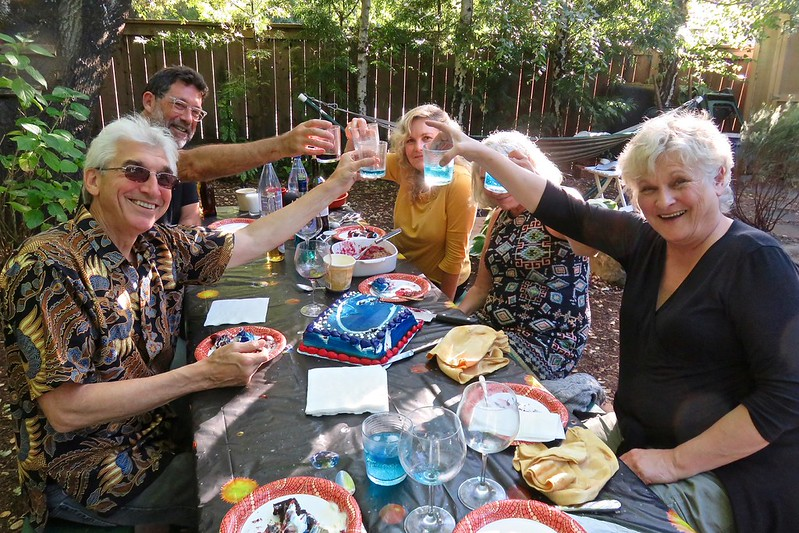
House parties (also known as small cultivation events) all serve one purpose – to help your nonprofit find people who value the good you do.
You can do that in two ways:
- Introduce people to your mission and the difference the program makes – with the goal of finding people who want to help make this possible. (No “ASK” at this type of event.)
- Share stories of the good your donors make possible and invite guest to support the mission financially. (This event has an “ASK”, so be SURE people know they will be given an opportunity to make a donation. NEVER surprise guests with an “ask.”)
Both types of events are important. Both are about relationships. Both are avenues to greater support.
Decide which purpose suits you and the people you are inviting.
Twelve steps to successful House Parties:
- Think of something fun. It can be as simple as a cozy dinner or as elaborate as the incredible original play followed by an ask.
- Ask staff to supply speakers on confirmed date and time.
- Invite people who may be interested. The event can be as small as 3-4 couples, plus a couple of staff and the hosts, or as large as 50-75 people with four to five staff plus the hosts. Having half the people come that you invite is a good return, so invite more than you actually expect to come. To get eight guests, invite 16. To get 50 invite more than 100.
- Match guests and staff. When you have your RSVPs, look at the guest list and divide the guests, who likely have the greatest interest and capacity for giving, into groups. This is just on paper. The guests should not be aware of this. Match the guests with staff members based on interests, gender, age, status, etc. – people likely to feel comfortable with each other. For instance, a corporate CEO would be matched with the Executive Director. Again, this is behind the scenes work. Give each staff member their list. It will say something like,” Rachel, please make a point of greeting: John and Suzi Smith, Janice Jones, Phil and Maribel Johnson and Samuel Mitchell.”
- Have nametags.
- Greet guests as they come in. Have a host and a staff member greet everyone. Have staff assure that everyone receives a nametag and is directed to the activity.
- During the mingle time, have staff make a point of chatting with the guests on their list. This should feel organic not like staff checking folks off their list. Staff and hosts are listening to guests. Listening is key. Listen for why they came, what their interests are, what they already know about your nonprofit, what their passions are. Make mental notes, like Suzi Smith is a cancer survivor. She is also a musician. Samuel just returned from Italy. He goes every year and loves the art and the wine. Share your findings with your Development staff.
- After folks have a chance to mingle, call everyone together. Thank them for coming and tell them about your nonprofit. Staff gives a brief overview of mission (3-4 minutes).
- If you are introducing your nonprofit: Staff or someone who benefitted from your mission shares a heart-felt story of the life-changing difference your mission makes. (5- 7 minutes) Then have another share by a person in a different role. If the first speaker was a staff member, then this story is a participant. (5-7 minutes) Then staff wraps up: “We’d love to stay in touch. If you’d like to receive our newsletter or get more involved, please leave your contact information on one of the sheets. (Point them out. Have more than one place to sign up. So there is no line or waiting.) Then the host invites everyone to have more coffee, wine, cake – – –
- If you’re making an ASK: Follow the directions above, but have the final speaker be a staff person, who invites guest to make a gift to help make more happy endings. Have envelopes and pledge cards for each guest. Have staff pass them out or have them easily available. Have a place for guests to place pledges. Then have host invite guests to have more refreshment.
- After the party – If you’re introducing your nonprofit: The area Development person follows up with a call asking for feedback and asking if the guest would like to get involved in any way. the Development person will make next day calls thanking donors, and she will call all other guests within a week asking for feedback and seeing if they have any interest in further involvement.
- Stay in touch with guests, who express interest in your mission. Not everyone will have an interest and know that is okay. They will do good elsewhere.
by Lari Hatley | Aug 21, 2019 | Starting Fresh
New office. New co-workers. New mission.. How do you start as a new Director of Development?
Your new boss may have planned orientation, staff meetings, and planning sessions for/with you.
Or
Someone may say, “There’s the coffee maker. There’s the bathroom. There’s your desk. Go!”
Either way, work in these first steps:
1. Read the Mission Statement. Keep that in mind. The missiion should drive everything you’re doing.
2. Study the website, marketing materials, FaceBook, Instagram, all social media. This is who your organization says it is. It is important to building trust with donors that words and actions match.
3. Meet with your Executive Director. This is the time to listen. Let the ED know you are collecting information in order to represent the organization more effectively.
Ask:
their vision,
their view of how development works,
what has worked in the past,
what they hope to see changed,
and who they see as the influencers (people others listen to) on the staff, the board, and among current donors.
4. Use the Executives Director’s list of influencers and add to it from your own observations. Who do people turn to when they need advice? Whose statements become policy. Who can kill an idea with a look. They may not have a title, but they have influence. Talk to them. Invite them to coffee away form the office. People tend to be franker when they know they won’t be overheard. Start with staff and –
Ask:
What drew you to this organization?
What do you see as our strengths?
Are there things we need to work on?
Are their minefields (topics or people) you should avoid or approach carefully.
Who do they see as influencers?
5. Set up meetings with board members. You can email, call, or meet in person. In person is most effective, when possible. Use the questions above and add:
How would you describe our current development program?
What do you see as development’s role?
How do you see your role in development?
6. In between these visits, study your data base. Who are your largest donors? Who are your long term donors? Set up meetings with them.
Ask:
How did you get connected with our organization?
Why do you support us?
What keeps you caring?
How do you like to connect? Email? In-person? Once a year. Often?
What could we improve?
7. Record your findings from each group: staff, board, and donors, in your data base.
The goal you are headed toward is strong relationships with people, who care about your mission, and who want to help. You have started your trip toward that goal by initiating relationships with key players and learning who the influencers are. By connecting with the influencers, you can multply the good you and your organization can do.
Now, help everyone keep the mission first in mind. Engage the whole team in making sure the organization has everything needed to do the most good.
You’re off to a good start!
by Lari Hatley | Aug 18, 2019 | Aquiring and Retaining Donors, Building Relationships
In my first position as a Director of Communications, every item that went out out in print, email, or online (Social Media would come later.) had to go through a tortuous line of proofers and editors. Every comma, every hyphen was debated. Every image was perfect.
We were a prestigious girl’s school. We had standards. The outcome was predictable – and bland.
So I tried an experiement.
I watched what was happeing at our school, and I thought about who would be interested. What would parents want to hear about? What about grandparents, alumnae, and board members. What would move their hearts?
I started to send emails when I saw something I thought would interest an audience. No set schedule. No committee proofing, editing, draining the life out of a conversation starter. Just emails from the heart that matched the audience – that felt spontaneous, authentic – real. I hit send and held my breath.
The feedback was instantaneous” “Thank you!” “I love this!” “Keep these coming!” And my favorite, “Can I send a check now!”
Converstations started. I was a real person to each audience. They became real to me. We had something in common. We cared about their kids, the students, the culture of the school, and the traditions. I wasn’t “selling ” them anything. I was just sharing what I saw that moved my heart. I was delighted when it moved theirs, too.
An interesting footnote:
Years later, I was looking back at copies of the emails. I couldn’t find a single one that didn’t have a typo or a punctuation error. I was struck by the fact that the very same people who were on the phone immediately to report a misplaced comma in a formal piece, loved these messages. I think the difference was that these felt real, matched their personal interest, and had an intimate quality – characteristics as valued as precision.
by Lari Hatley | Aug 14, 2019 | Aquiring and Retaining Donors
What I remember most about my first Association of Fundraising Professionals (AFP) meeting is the speaker. He was a very successful Director of Development. He raised lots of money, and he shared how he had stopped at a farm stand to buy five ripe tomatoes to take to a long-time donor.
At the time, I thought, “Cute story. Now get to the money.” Agggg! I had a lot to learn.
Years later, I remember those tomatoes, and donors have taught me their value. Those luscious edibles said, “I listened to you. I heard what you enjoy. I remembered and acted on it, because you matter to our organization.”
Letting donors know they matter is important at a very basic level. According to Marianna Pogosyan, PhD, the feeling of belonging contibutes to a meaningful life, since being part of a group makes us feel part of something larger than ourselves. It provides a sense of “lastingness” amd “continuity.” These are important concepts, but especially meaningful to older donors, who give the largest percentage of charitable dollars.
In Maslow’s Hierachy of Needs, belonging is right in the middle of the pyramid.
Leon F. Seltzer, PhD gives Ten Reasons Why Feeling Understood Is Crucial To Your Well-Being.
Here are three of them. Feeling understood, makes you feel:
1. You’re known
2. You ‘re accepted.
3. You’re empowered.
Known, accepted, empowered, part of something larger than yourself: that is why five ripe tomatoes go such a long way toward building a strong relationship between an organization doing good and a person, who wants to help.
That relationship is the foundation upon which philanthropy is built.
by Lari Hatley | Aug 12, 2019 | Aquiring and Retaining Donors, Communication, The Ask
As a Director of Development, I quickly learned that I wasn’t asking people for money. I was giving good folks a chance to be part of something that mattered to them. It changed the conversation.
When I met with new prospects, we would have a friendly chat. I shared a little bit about myself and the mission of the organization I represented, but mostly I listened. What did this person care about? What mattered to them? If our mission mattered to them, then I knew that they might enjoy knowing more about what we did and about how they might help. If our mission didn’t share any touch points with what mattered to them, I might still know of ways to “do good’ that might interest them. I could share those.
Just as important, as learning where the person before me might connect with the organization, was learning who they were as a person. Did the love to travel, hate mushrooms, adore their cat, worry about their oldest child, hold deep religious convictions – or not. All these things would help me show that I cared about them as a person – not just as a pocketbook.
One thing we all have in common, whether we live paycheck to paycheck, have a huge trust fund, or hope a nonprofit can help us find a place to sleep tonight, is that we want to feel valued and understood. We all want to be recognized for who we are – not just because we are pretty or rich or in a wheel chair or struggling to feed our kids. Valued. Understood. Noticed. Heard.
Listening. It’s an art.
Erich Fromm, noted social psychologist, share six steps to mastering this skill in his book, “The Art of Listening.”
- The basic rule for practicing this art is the complete concentration of the listener.
- Nothing of importance must be on his mind, he must be optimally free from anxiety as well as from greed.
- He must possess a freely-working imagination which is sufficiently concrete to be expressed in words.
- He must be endowed with a capacity for empathy with another person and strong enough to feel the experience of the other as if it were his own.
- The condition for such empathy is a crucial facet of the capacity for love.
- To understand another means to love him — not in the erotic sense but in the sense of reaching out to him and of overcoming the fear of losing oneself.
Listening is an art that will pay off in strong relationships and deep support,
First published in 2017.