

NOW I have a plan
Thanks to a White Paper by Veritus Group , now I have a plan I can live with for qualifying major donors. Up until I read this White Paper, every time my Executive Director asked for my plan for each donor, I wrote one up, and handed it in, but always with the caveat, that these are people not pocketbooks, so this is flexible. I’ll be responding to each person.
So I was delighted to read “Qualifying Donors for Major Caseloads.” First, Veritus Group gives an excellent formula. Their White Paper has all the detail you might need, but here’s an outline:
- Rank donors who have given $1,000 or more in the last four years from high to low based on recent giving, amount, capacity, and current relationship.
- Have the ED send a letter introducing you and your role as a donor liaison.
- Research the database and note for information about the donor.
- Make a call to introduce yourself and your role but mainly to (see 5).
- Use the call to listen and learn about donor interests.
- Send a touch point, like the annual report, a program update, or a note from a person benefitting from the donor’s support.
- If you haven’t connected yet, send a brief survey.
- For top donors, try one more touch point.
- Call about the survey.
- Send a Handwritten note.
Okay, this is a great format, but what really sold me was their reminder:
Think of the donor as a friend – – . Be intuitive. Go with the flow. Pay attention to the person. They will give you the clues for what to do next.
How perfect. You have a plan, but it’s built on the knowledge that each donor is unique.
So – plan, but listen to the donor. Then go on a journey to complete the mission together.

Six Building Blocks for Growing Support
- Board members are absolutely key. Many grants will ask for a list of your board members. A number of grantors will ask about what percentage of the board financially supports your mission. They want the answer to be 100%. I always tell my board members, “If we don’t care enough about what we are doing to support it financially, why should anyone else?” It is important that they like and respect you. It is equally important that they all give at leadership levels – whatever that means for each person. (We have materials to help board members learn about their proper role in governance and giving.) Board members will ideally be people of influence. They should be respected by your community. They should be people that others turn to say, “What do you think?”
- Recruit at least three – five additional people to serve on a Development Committee. They will be in training to see if they are a good fit for future board members. They will serve as your right hands in hosting small events that introduce people to your organization and writing thank you notes. (Yes, it takes time to recruit and train them, but it will save you time in the long run.)
- Use social media. Assemble a team of On-line Ambassadors – folks who agree to like, comment, and share your social media outreach and who will link back to your website from their social media. It seems so simple but it moves you up in SEO and keeps you in the news feeds longer so you can reach more people. You can ask them to watch for posts from others where they can draw attention to your organization in the comments – like, “I know an organization that helps with this. Check out their website.”
- Now, you have a core group that will help you share your stories. You want ways to share the stories of lives changed. You need stories, and you need people to share the stories with. You need contact information, so you are able to share the stories. You will need names, addresses, phone numbers, e-mails and if possible the relationship to someone connected to the organization.)
- A sampling of ways to engage prospects:
a. Invite businesses that are interested in your mission or benefit from it to come for a tour or observe your organization in action Be sure to collect contact information from the attendees. Send emails or notes thanking them for coming. Add them to your newsletter and appeal lists.
b. Have Board members and Development Committee members host small coffees, where they invite 4-8 people they think may be interested in your mission. In addition to light refreshments, have a brief PowerPoint or video or talk outlining what is special about your program – include brief stories of lives changed. If you have collateral marketing material, hand it out. Be sure to collect contact information. Have committee members follow up with a phone call, asking attendees for feedback and if they would like to get involved in any way – such as volunteering or donating, and do they know anyone else, who might be interested.
You’ve collected contact information for prospective donors, now what?
a. Consider sending a newsletter two times per year. Share stories of lives changed with a focus on the role of donor support. Tell about a program expanded and the difference that made for a life. Include a donor profile in each newsletter. Telling the story of the donor and their words for why they give. Keep it personal. Lives saved. Understanding gained. Community improved.
b. Mail out an appeal with a response card and envelope to everyone in your data base in the spring and in the fall. Focus the appeal on the difference donors make in lives. You can do electronic appeals at the same time. Keep in mind that in-person asks get 64 times more gifts than either written or electronic asks. So make personal asks of potential larger donors.c.Enlist a well-respected board member to help you solicit the rest of the board.
c. Have your board members and development committee members divide up the names of donors and see that each donor is thanked in writing as quickly as possible – within 48 hours if possible. Call each donor who gives more than $250 the day the gift is received.
d. Once a year, have the Development Committee host a thank you gathering for all donors. Display pictures related to your mission. Have light refreshments. Consider having 3 very brief testimonials from people who understand the power of your work.
e. Have a Thank-a-thon where Board and Development Committee members use a script to call donors and thank them. Usually, they will leave a message.
f. Thank yous from people who benefitted or closely observed the benefit are particularly powerful.

Whether your event is live or virtual, this one phone call can change the way you view it. It did for me.
For my first position as a Director of Development, I was hired by a wonderful organization that had a tradition of hosting multiple events, including a gala and auction. So my first year, that’s what we did. We planned. We decorated. We hired a caterer. We scoured the town for sponsors and auction items. We found a band. You know the drill: lots of work hours. Lots of volunteer hours. Lots of stress. Lots of expense and a great return – at least it looked great until we subtracted costs, staff time, and relationship building activities left undone.
But for me the real insight came when I received a call from my daughter. She and her husband had attended their first charity ball. She knew I’d be proud. I could hear her excitement as she shared, “It was a Masquerade Ball.” She detailed their costumes. She listed all they had spent: this much for tickets, this much at the auction, and this much as a donation. It was a hefty total for young salaries. I was proud. I had raised a generous daughter.
Then I asked that important question, “What did you support?” The line went quiet. After an awkward pause. There was a rush of words: “It was an illness. Or children. Or animals.”
I can tell you. I saw the light.
The Masquerade Ball raised money. It did NOT raise support. My daughter and her husband would not “be there” for the organization. They didn’t know what the organization was.
Needless to say, our organization’s next event was different.
Here’s what we did:
- We kept the event mission focused.
- We kept it simple. We didn’t want the event to outshine the mission.
- All visuals were mission focused. The images told heart-moving stories.
- We had an emcee, who was warm, friendly and passionate about our cause.
- We had three people give brief, heart-felt testimonials about how donors changed lives.
- We had a brief, heart-felt ask focusing on the good donors would do.
- We gave attendees a chance to give.
That was it. Simple. Mission focused. Story led. Did it make a difference? We septupled the income and cut costs by 70%. Also we grew our donor base with 65% of the donors continuing to give for at least two years
When we followed up after the event 97% of the guests mentioned the mission in a positive light and had enjoyed the event, and staff was nowhere near as tired. Win. Win. Win.
Finding new donors
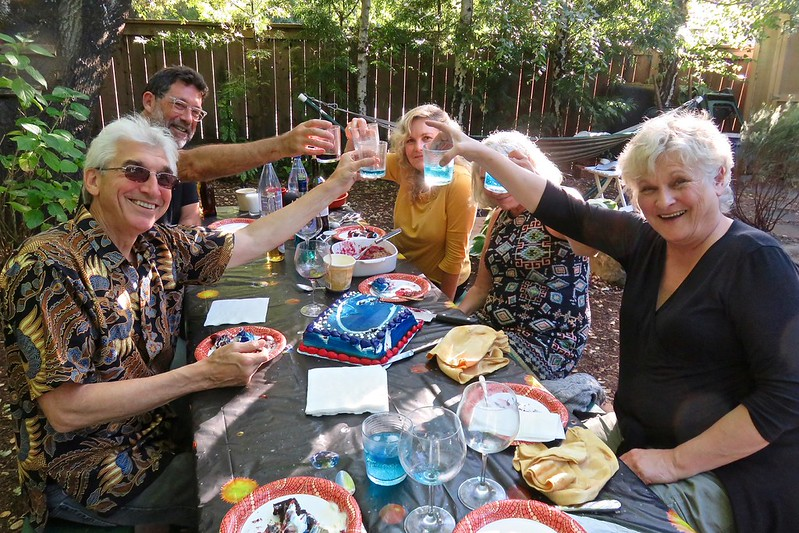
House parties (also known as small cultivation events) all serve one purpose – to help your nonprofit find people who value the good you do.
You can do that in two ways:
- Introduce people to your mission and the difference the program makes – with the goal of finding people who want to help make this possible. (No “ASK” at this type of event.)
- Share stories of the good your donors make possible and invite guest to support the mission financially. (This event has an “ASK”, so be SURE people know they will be given an opportunity to make a donation. NEVER surprise guests with an “ask.”)
Both types of events are important. Both are about relationships. Both are avenues to greater support.
Decide which purpose suits you and the people you are inviting.
Twelve steps to successful House Parties:
- Think of something fun. It can be as simple as a cozy dinner or as elaborate as the incredible original play followed by an ask.
- Ask staff to supply speakers on confirmed date and time.
- Invite people who may be interested. The event can be as small as 3-4 couples, plus a couple of staff and the hosts, or as large as 50-75 people with four to five staff plus the hosts. Having half the people come that you invite is a good return, so invite more than you actually expect to come. To get eight guests, invite 16. To get 50 invite more than 100.
- Match guests and staff. When you have your RSVPs, look at the guest list and divide the guests, who likely have the greatest interest and capacity for giving, into groups. This is just on paper. The guests should not be aware of this. Match the guests with staff members based on interests, gender, age, status, etc. – people likely to feel comfortable with each other. For instance, a corporate CEO would be matched with the Executive Director. Again, this is behind the scenes work. Give each staff member their list. It will say something like,” Rachel, please make a point of greeting: John and Suzi Smith, Janice Jones, Phil and Maribel Johnson and Samuel Mitchell.”
- Have nametags.
- Greet guests as they come in. Have a host and a staff member greet everyone. Have staff assure that everyone receives a nametag and is directed to the activity.
- During the mingle time, have staff make a point of chatting with the guests on their list. This should feel organic not like staff checking folks off their list. Staff and hosts are listening to guests. Listening is key. Listen for why they came, what their interests are, what they already know about your nonprofit, what their passions are. Make mental notes, like Suzi Smith is a cancer survivor. She is also a musician. Samuel just returned from Italy. He goes every year and loves the art and the wine. Share your findings with your Development staff.
- After folks have a chance to mingle, call everyone together. Thank them for coming and tell them about your nonprofit. Staff gives a brief overview of mission (3-4 minutes).
- If you are introducing your nonprofit: Staff or someone who benefitted from your mission shares a heart-felt story of the life-changing difference your mission makes. (5- 7 minutes) Then have another share by a person in a different role. If the first speaker was a staff member, then this story is a participant. (5-7 minutes) Then staff wraps up: “We’d love to stay in touch. If you’d like to receive our newsletter or get more involved, please leave your contact information on one of the sheets. (Point them out. Have more than one place to sign up. So there is no line or waiting.) Then the host invites everyone to have more coffee, wine, cake – – –
- If you’re making an ASK: Follow the directions above, but have the final speaker be a staff person, who invites guest to make a gift to help make more happy endings. Have envelopes and pledge cards for each guest. Have staff pass them out or have them easily available. Have a place for guests to place pledges. Then have host invite guests to have more refreshment.
- After the party – If you’re introducing your nonprofit: The area Development person follows up with a call asking for feedback and asking if the guest would like to get involved in any way. the Development person will make next day calls thanking donors, and she will call all other guests within a week asking for feedback and seeing if they have any interest in further involvement.
- Stay in touch with guests, who express interest in your mission. Not everyone will have an interest and know that is okay. They will do good elsewhere.

Want to connect with donors? Be real.
In my first position as a Director of Communications, every item that went out out in print, email, or online (Social Media would come later.) had to go through a tortuous line of proofers and editors. Every comma, every hyphen was debated. Every image was perfect.
We were a prestigious girl’s school. We had standards. The outcome was predictable – and bland.
So I tried an experiement.
I watched what was happeing at our school, and I thought about who would be interested. What would parents want to hear about? What about grandparents, alumnae, and board members. What would move their hearts?
I started to send emails when I saw something I thought would interest an audience. No set schedule. No committee proofing, editing, draining the life out of a conversation starter. Just emails from the heart that matched the audience – that felt spontaneous, authentic – real. I hit send and held my breath.
The feedback was instantaneous” “Thank you!” “I love this!” “Keep these coming!” And my favorite, “Can I send a check now!”
Converstations started. I was a real person to each audience. They became real to me. We had something in common. We cared about their kids, the students, the culture of the school, and the traditions. I wasn’t “selling ” them anything. I was just sharing what I saw that moved my heart. I was delighted when it moved theirs, too.
An interesting footnote:
Years later, I was looking back at copies of the emails. I couldn’t find a single one that didn’t have a typo or a punctuation error. I was struck by the fact that the very same people who were on the phone immediately to report a misplaced comma in a formal piece, loved these messages. I think the difference was that these felt real, matched their personal interest, and had an intimate quality – characteristics as valued as precision.