by Lari Hatley | Jul 30, 2020 | Focus on the Mission
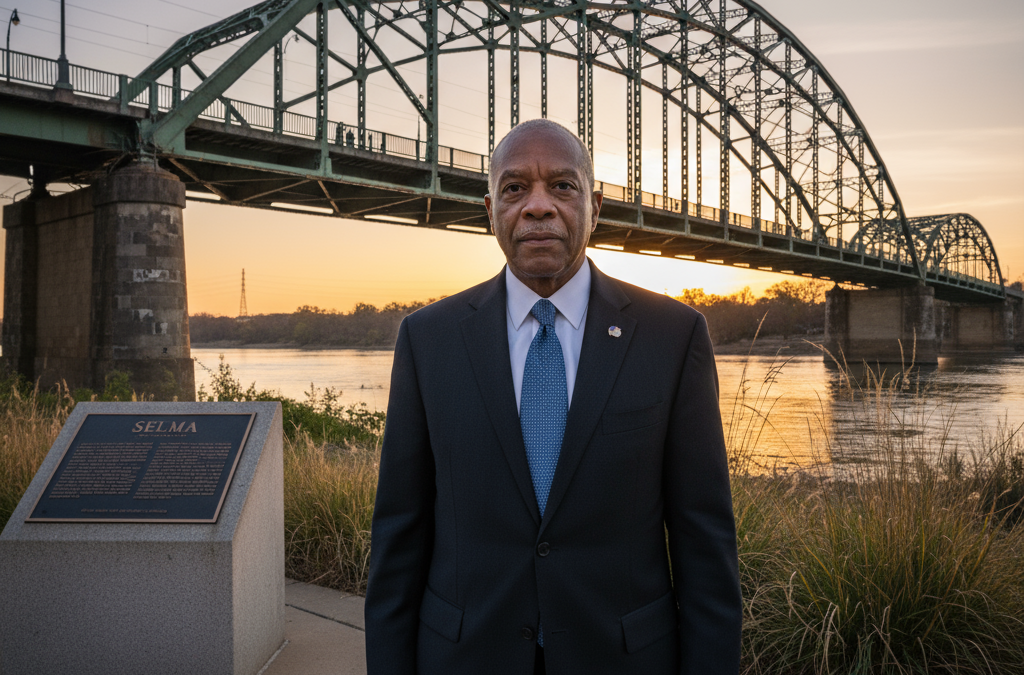
If ever there was an example of how to benefit a cause, how to live a mission, John Lewis lived it. As I listened to the tributes at his funeral, I thought, that’s who all of us in the social sectors want to be. John Lewis lived a life of purpose, a life with meaning. He was willing to risk everything, including his life, to “do good. “ His mission was helping to create an America where there was real equality for all, regardless of color or economic status. His mission was a country that lived love and respect for all. Our missions may have narrower foci, but his lessons are there for all of us.
First, he knew the brutal facts of opposition to his mission, and in his case ‘brutal’ was a literal fact. He faced brutality with compassion, caring, and “good trouble.” We must follow his lead, we must live his legacy.
Let our goals be deep meaning over great profits. Let us pour our resources: our time, our talents, our dollars into causes that we are passionate about, that benefit others, that collectively we can do better that anyone else.
Let us practice the nobility of service rather than personal gain, as John Lewis did. Let us confront our brutal facts with tenacity, courage and grace, as he did.
Let us stay focused on the core of our mission, putting achieving the mission’s goals above our personal achievement.
Let us live and work in ways that leave the world a better place. Let us leave the next generation the tools and inspiration needed to continue making “good trouble” until the mission is complete. John Lewis did.
Thank you, Senator Lewis, for showing us and the world a kind, a caring, a peaceful way to “do good.”
by Lari Hatley | Jul 24, 2020 | Best Business Practices
Like you, I’ve been working to help boards understand the difference in running a successful business and leading a successful nonprofit. The monograph “Good to Great & the Social Sector” uses language that helps business oriented minds understand. Collins says that in the social sector, money is only an input, and not a measure of greatness, while in business money is the input and the outcome.
For folks used to thinking on business terms, it’s all about the dollars. In business, you need money to produce a product, which you sell to get – – money. So here’s the difference. With nonprofits, we need money to DO something that makes things better. We measure “better.” Not dollars.
Collins recognizes the challenge. Chrysler can say, we spent money to make a car. You paid us money, so you could have that car. You paid us considerably more than it cost us to make that car, so now we can make more cars – and pay our workers enough so they’ll stay, and pay our CEO a huge salary – because he’s really good.
- Nonprofits say, your dollars helped us do more good. Our challenge is defining “more good,” in a way that makes people want to keep helping. In order to do that, we must first ask some critical questions. Collins defines them as:
- What are we deeply passionate about?
- What can we do better than anyone else?
- What resources do we need to do it?
You may have heard this expressed as: What do we do that is unique and worthy of support?
Once we’ve defined these things, we must define measurable outcomes – for two reasons:
- So we know what we are trying to accomplish and if we accomplished it.
- So our “stockholder, those people helping to supply the resources we need to achieve our outcomes, can see that they made a difference. What they “get” is knowing that they made a difference.
Collins recognizes that nonprofit goals are often less tangible and less easily measured that those of a business, but he suggests that if we clearly define what we are trying to accomplish, we can then collect evidence that that was accomplished – and that evidence may be quantitative (something you can count) or qualitative(something that has a story.)
So our first step is taking a hard look at what we’re passionate about, what we can do better than anyone else, and what resources do we need to do this. We have to know where we are going. Funds (or resources) are fuel in the engine, but it is wasted if you don’t have a clear destination. You have to know where you are going and why – and how to tell when you get there.
by Lari Hatley | Jul 22, 2020 | Best Business Practices, Building Relationships
If you’re in Development, you probably get a lot of pressure to focus on money. Bring it in NOW. Get the gifts. Make the asks!
A board member or even your Executive Director may push you to have events – lots of events. “They bring in the money. “ “They build the donor base.” And when donor retention is down, they blame you.
Okay, time to teach. Help the board, the administration, and the staff understand the difference in raising money and building support. It’s the difference in thinking short term and thinking long term.
Yes. There are times when you need the money NOW, and that’s usually because the organization has been thinking short term.
Here’s what I mean. You had a gala, a golf tournament, a 5K, and a peer-to-peer campaign. Your raised money. It looks good, but now you are on the hamster wheel. You’ll have to keep having LOTS of events, because you raised money, but you didn’t necessarily raise support. You may have bumped up the donor numbers, but are they committed? Do they know who you are, what you do and why, or did they just have fun, give because Aunt Suzie invited them, brother John asked and they gave, they don’t really know to what.
Let’s look at the best practices. Data does show one signature event is best – one that clearly shares your mission and has donors leaving delighted to be part of something so important. You have the best chance of gaining real support -people who give and give again, because it matters to them.
Best practice shows that taking time to build relationships has a greater long-term benefit. So, think long-term. You want support – long term support. You want people who are glad to be partners, who are with you because they care, because they know they are needed and appreciated. They are not giving to get a prize, or to get their name on a list or even a building. They are giving because your mission matters to them. They are giving because they know they are part of the mission’s success.
This is where long-term comes in. It means taking time to know what matters to your donors, sharing stories and data that matters to them. It means taking the time to call, to write the personal note, to send the picture that shows the result you know they care about. When it’s safe, it means making the visit, having coffee, having them come in to see what they care about.
It also means giving them the opportunity to share their skills and talents as well as their cash. Ask that Marketing Professional to give you feedback on your website. Ask the graphic designer to advise you on your branding. Ask the English teacher to proof your appeal. Ask that person who loves to entertain to host a small group gathering.
It feels good to give.It feels good to do good. It feels good to be noticed. It feels good to be recognized. It feels good to matter. And we all want to feel good.
by Lari Hatley | Jul 21, 2020 | Building Relationships
With the world so unsettled lately, I’ve been looking at my resume. I’m very goal oriented. Tell me you need $10. I’ll get you $20. Everywhere I’ve been, I exceeded monetary goals, doubled, or tripled the donor base, increased donor retention. The list of accomplishments goes on, but the truth is when folks asked me how I did it, I didn’t know.
I said I wrote out plans, managed moves, and had a portfolio of donors with individual plans, but to tell you the truth inside I felt like I was just lucky.
Well, finally I’m beginning to find the words for why things tended to work.
Yes, I did keep that dollar goal in mind – always, but my focus was on people and on the relationship they felt to the organization. That meant people first. Plans second. Metrics third.
I did meet with the folks who had given the most in the past; people, who had given the longest, and people, who clearly had a deep interest in our mission. And yes, I did research their giving potential, their profession, their giving history, and their other charitable giving, but what seemed to matter the most is that I just listened – whether we conversed by text or email, phone or in-person. When I listened, then I could honor who they were and what they cared about.
If they were passionate about our mission, I would tell them about the good they could make possible. When they cared, I made sure they heard about the lives they had changed, they good they had done. If they gave because they had a connection to staff, I told them how effective their friend was and how happy the friend was to know they were doing good together.
If they had other interests they cared about, I made sure to share opportunities to do the good that meant the most to them. If they weren’t interested in our mission, I knew they had other “good” to do, and let go.
So, all in all, I made sure our mission had diverse revenue streams, but kept in mind that the majority of charitable giving comes from individuals. While I wrote grants, approached businesses and corporations, I knew that people mattered most of all. People, who care, can do lots of good – especially when they know you care about them.
by Lari Hatley | Jul 18, 2020 | Best Business Practices
Maybe we’ve been looking at Development wrong. In fact, maybe we’ve been looking at our nonprofit structures wrong. We segmented roles: boards govern and oversee the director; the staff carries out the mission, the administration oversees the staff, and donors supply dollars to fund the mission.
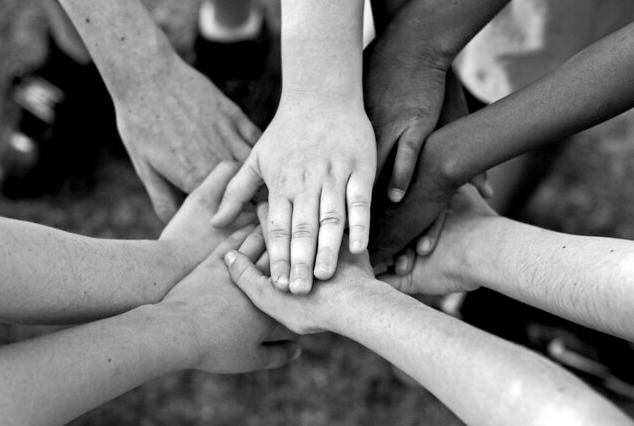
What if we thought of ourselves as one team – working together to do one good – a good we all agree needs doing. Each of us uses our unique talents to further a mission that is itself unique and worthy of support. Our skills may be different, but we are equally important.
If we thought of our nonprofit as one tram, a lot would shift. One important shift would be the way we view donors. They would stop being a faceless ATM and become people, teammates essential to the team.
Then we won’t be “begging them for money,” we will be inviting them to join the team in making the world a better place in a way that matters to them and to us. Then we would listen to their interests, their passions, and their values. We would share our successes. We would recognize we need the whole team to make “good” happen.
As team members, donors care about staff, administrators and board members, and we ALL care about them. We ALL share stories with donors – stories of need, stories of success. We show them appreciation. We hear what they need. We recognize their role.
Maybe Development is less about metrics and more about relationships, and the whole team helps.