

NOW I have a plan
Thanks to a White Paper by Veritus Group , now I have a plan I can live with for qualifying major donors. Up until I read this White Paper, every time my Executive Director asked for my plan for each donor, I wrote one up, and handed it in, but always with the caveat, that these are people not pocketbooks, so this is flexible. I’ll be responding to each person.
So I was delighted to read “Qualifying Donors for Major Caseloads.” First, Veritus Group gives an excellent formula. Their White Paper has all the detail you might need, but here’s an outline:
- Rank donors who have given $1,000 or more in the last four years from high to low based on recent giving, amount, capacity, and current relationship.
- Have the ED send a letter introducing you and your role as a donor liaison.
- Research the database and note for information about the donor.
- Make a call to introduce yourself and your role but mainly to (see 5).
- Use the call to listen and learn about donor interests.
- Send a touch point, like the annual report, a program update, or a note from a person benefitting from the donor’s support.
- If you haven’t connected yet, send a brief survey.
- For top donors, try one more touch point.
- Call about the survey.
- Send a Handwritten note.
Okay, this is a great format, but what really sold me was their reminder:
Think of the donor as a friend – – . Be intuitive. Go with the flow. Pay attention to the person. They will give you the clues for what to do next.
How perfect. You have a plan, but it’s built on the knowledge that each donor is unique.
So – plan, but listen to the donor. Then go on a journey to complete the mission together.

Share the joy – ASK
“I can’t ask people for money. I HATE begging! Don’t you? How can you stand it?”
If you’re in Development, you’ve heard these words – from board members, administrators, staff and volunteers. But in Development, we just see asking differently. For us, we invite people, who share our interests, to join us in making a difference. Doing good feels good.
Well, it turns out science agrees. Giving actually does make us happy. It all started long ago. Dacher Keltner, co-director of UC Berkley’s Greater Good Science Center, points out that because our young are fragile, the human race wouldn’t have lasted if we hadn’t developed altruism. He says, “Human Beings have survived as a species because we evolved the capacity to care for those in need and to cooperate.”
Helping others is who we are. It’s part of our biology. It’s part of our chemistry. Literally. Jorge Moll of the National Institute of Health shared the biology of happiness. He and his colleagues found that giving to charities activates the regions of the brain associated with pleasure, social connection and trust. (Which may help us understand why trust is so important in our relationships with donors.)
Eva Ritva, MD, a psychiatrist, explains the chemistry. She says that giving releases Happiness Trifecta of brain chemicals. Kindness triggers the release of oxytocin, serotonin and dopamine. You get the same high as running several miles – without even having to breathe hard. Not only is your mood boosted, but these chemicals counteract the effects of cortisol, the stress hormone.
Michael Norton and his colleagues at Harvard Business School found giving to others increased happiness even more than spending on ourselves. Happiness, better health, who wouldn’t want to share that, but wait. There’s more.
Giving may even lengthen your life span. Steve Cole of UCLA and Barbara Fredrickson of UNC-CH found a life of meaning and purpose (or eudaimonic happiness) lowers the inflammatory response, because it is so pleasurable. It also strengthens our connections to others and that strengthens our immune system.
So just think, when you give a person, who cares about your mission, an opportunity to help, an opportunity to be part of doing good, you are sharing happiness. You are sharing purpose and social connection. You are sharing better health and longer life.
So do your friends, your donors a favor. Give them the opportunity to give.
John Lewis and his lessons for nonprofits
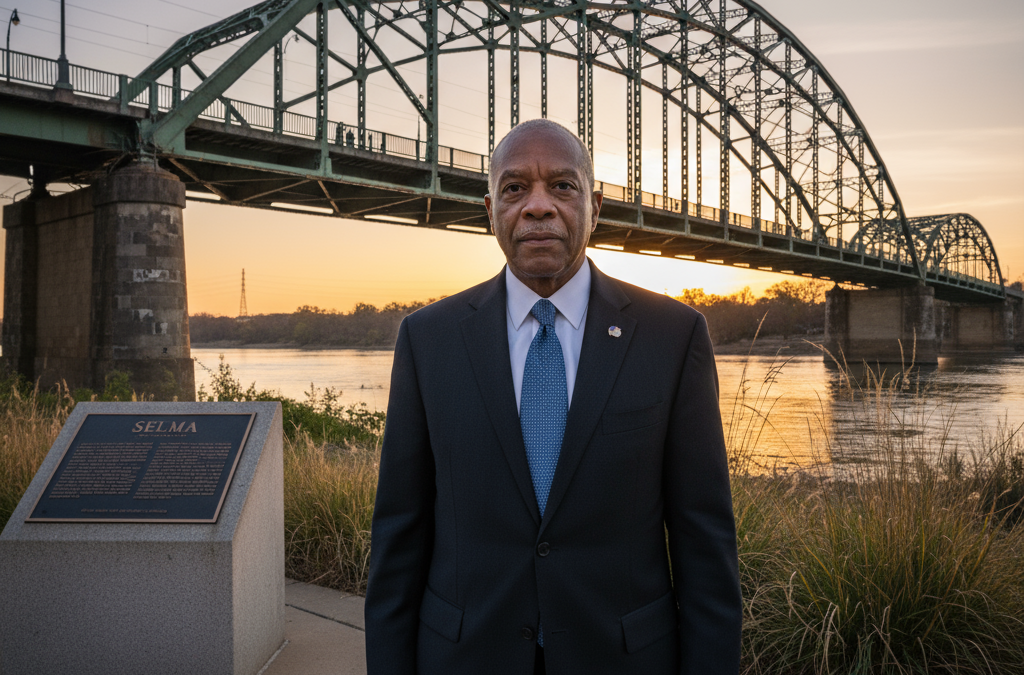
If ever there was an example of how to benefit a cause, how to live a mission, John Lewis lived it. As I listened to the tributes at his funeral, I thought, that’s who all of us in the social sectors want to be. John Lewis lived a life of purpose, a life with meaning. He was willing to risk everything, including his life, to “do good. “ His mission was helping to create an America where there was real equality for all, regardless of color or economic status. His mission was a country that lived love and respect for all. Our missions may have narrower foci, but his lessons are there for all of us.
First, he knew the brutal facts of opposition to his mission, and in his case ‘brutal’ was a literal fact. He faced brutality with compassion, caring, and “good trouble.” We must follow his lead, we must live his legacy.
Let our goals be deep meaning over great profits. Let us pour our resources: our time, our talents, our dollars into causes that we are passionate about, that benefit others, that collectively we can do better that anyone else.
Let us practice the nobility of service rather than personal gain, as John Lewis did. Let us confront our brutal facts with tenacity, courage and grace, as he did.
Let us stay focused on the core of our mission, putting achieving the mission’s goals above our personal achievement.
Let us live and work in ways that leave the world a better place. Let us leave the next generation the tools and inspiration needed to continue making “good trouble” until the mission is complete. John Lewis did.
Thank you, Senator Lewis, for showing us and the world a kind, a caring, a peaceful way to “do good.”